


Shih Tzu Care Guide: Grooming, Health and Temperament
Disclosure: This post contains affiliate links. As an Amazon Associate I earn from qualifying purchases. Read our full Affiliate Disclosure here.
With their flowing coats, big dark eyes, and famously sweet personalities, Shih Tzus have been stealing hearts for centuries — they were literally bred as lap dogs for Chinese royalty. But that gorgeous coat and those adorable eyes don't maintain themselves. This guide covers everything a Shih Tzu owner needs to know: the daily grooming routine, common health concerns, and what makes this breed's temperament so special.

A Shih Tzu in full coat: daily brushing keeps this flowing hair mat-free.
Grooming: The Daily Non-Negotiable
A Shih Tzu's long, silky hair is beautiful — and a full-time commitment. In full coat, most owners need to brush daily. Skip a few days and tangles quietly turn into mats, which pull painfully on the skin and often have to be cut out.
The daily brush-out
Work in layers, lifting the coat in sections and brushing from the skin outward — never just over the top, where mats hide underneath. A slicker brush is the workhorse tool here: its fine pins glide through the fine hair and catch the small tangles that start near the roots. After brushing, run a steel comb through the coat; if it glides smoothly, you're done. If it snags, there's a tangle the brush missed.
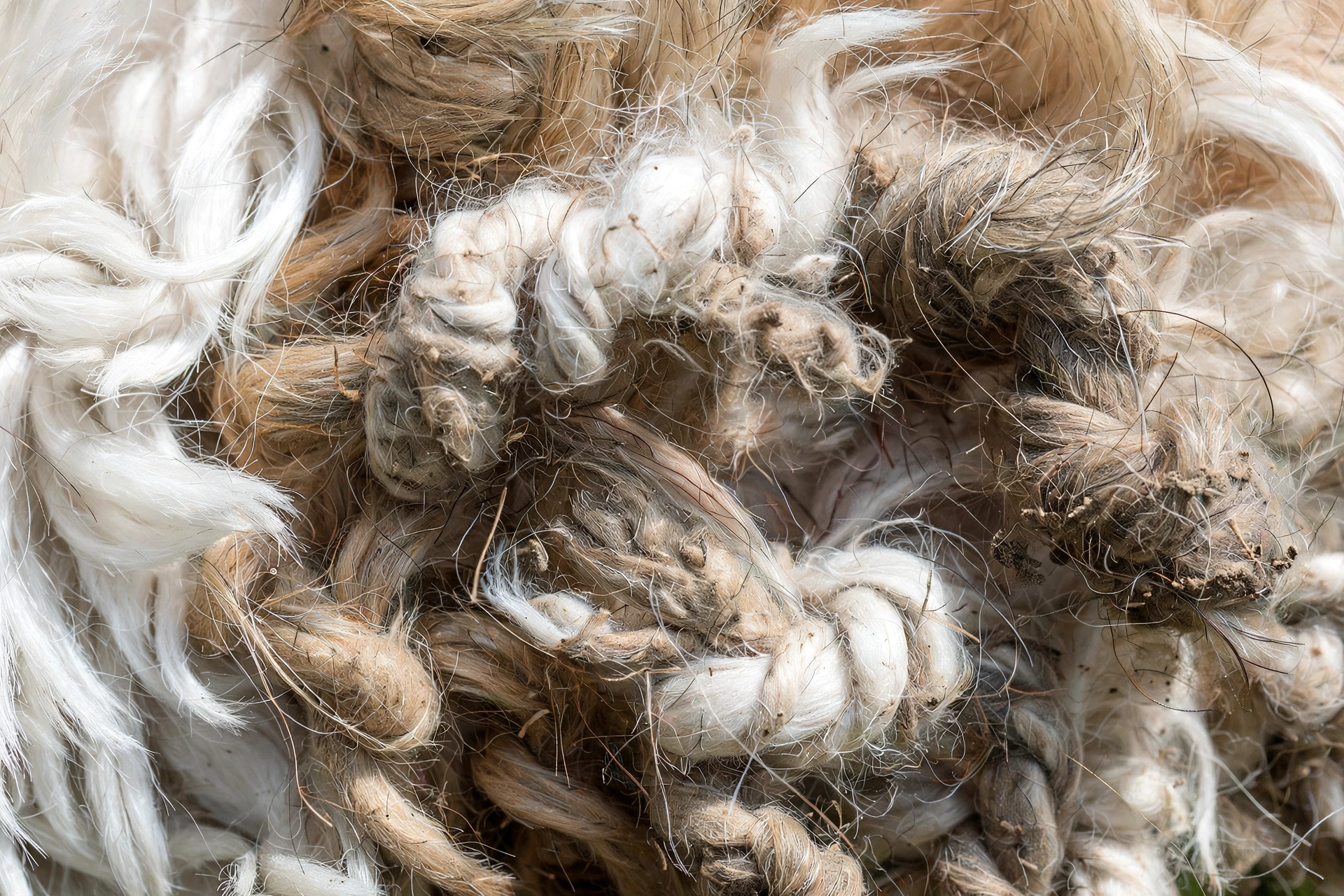
A matted patch on a Shih Tzu's coat — this is what daily brushing prevents.
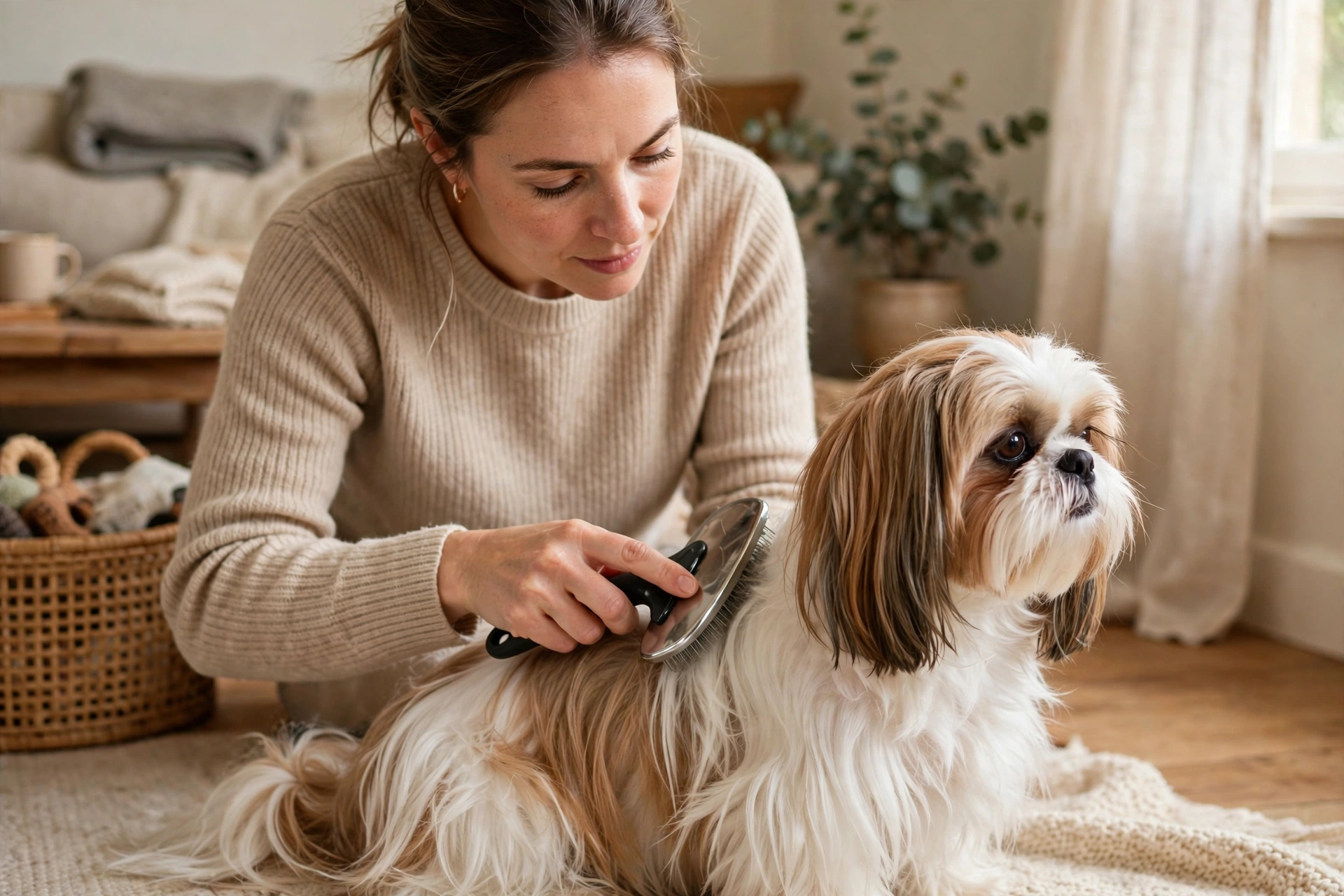
The daily brush-out: work in layers from the skin outward with a slicker brush.
Bathing every 3–4 weeks
Shih Tzus typically need a bath every three to four weeks, more often if they get into something messy. Always brush out tangles before the bath — water tightens mats and turns small ones into rock-hard ones. Use a gentle, pet-formulated shampoo and lukewarm water, working from the body down to the legs and tail. Rinse thoroughly: leftover shampoo irritates the skin and causes flaking. After the bath, towel dry, brush out, and finish with the comb test again.
Eyes, ears, and nails
Those big round eyes are prone to tear staining — the reddish-brown tracks that stain the fur under the inner corners of the eyes. Wiping the area daily with a damp cloth or a vet-approved eye wipe keeps staining to a minimum, and trimming the hair around the eyes (or having your groomer do it) prevents stray hairs from scratching the cornea.
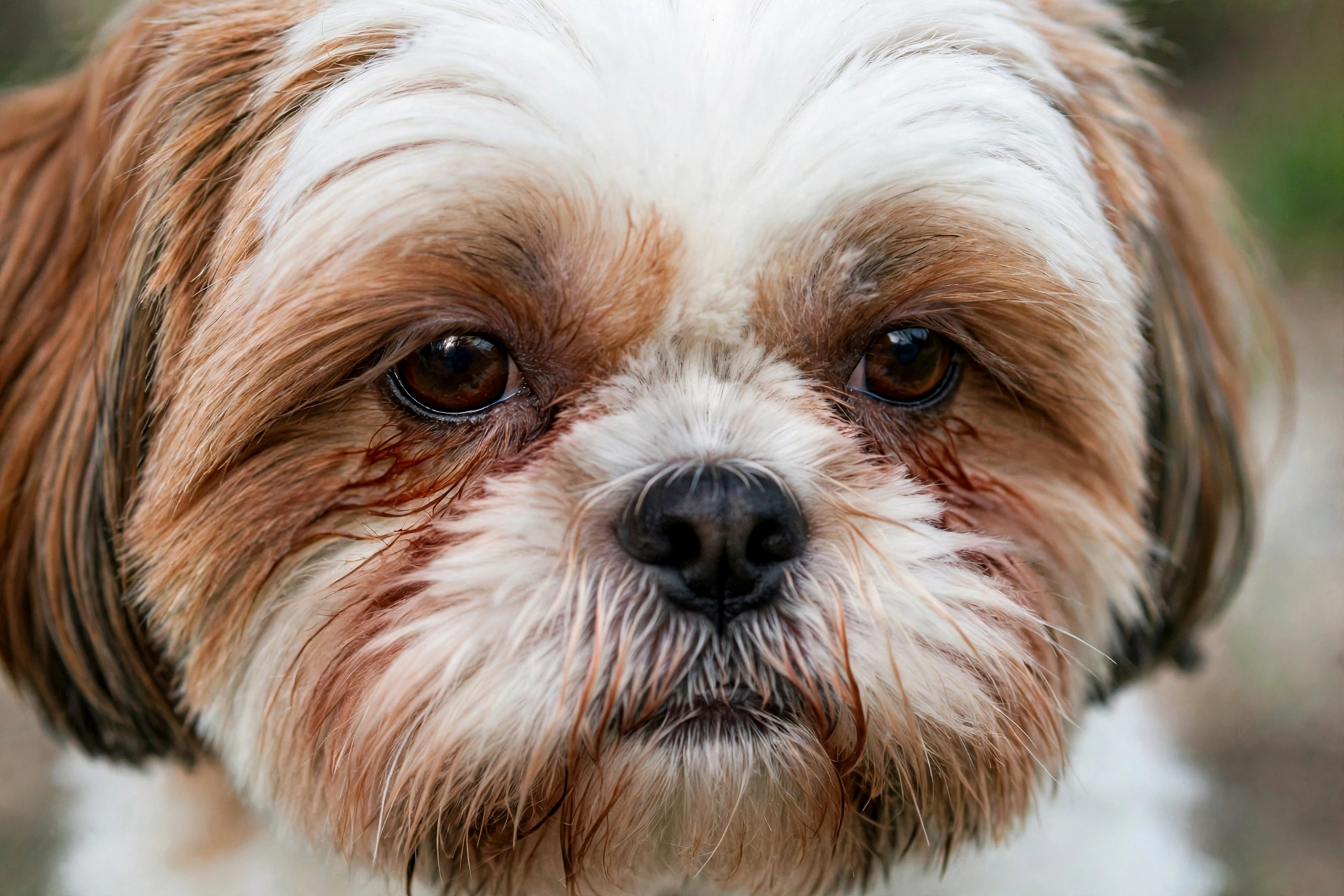
Tear staining under a Shih Tzu's eyes — daily wiping keeps it under control.
Shih Tzu ears hang down and fold over, trapping warmth and moisture — the perfect setup for ear infections. Lift the ear flaps weekly, sniff for any sour odor, and wipe visible wax from the outer ear with a vet-approved ear cleanser. Never push anything deep into the canal.
Nails need trimming every two to three weeks. Long nails click on the floor and, over time, change how the paw sits — painful and bad for posture.
The Puppy Cut: A Practical Alternative
You don't have to keep the floor-length show coat. Many pet owners opt for a "puppy cut" — the whole coat trimmed to one to two inches. It looks adorable, slashes brushing time, and is far cooler in summer. A professional trim every 6–8 weeks keeps it tidy. Even in a puppy cut, the face still needs attention: hair around the eyes grows fast and can irritate the eyes within weeks.
Health: What Shih Tzus Are Prone To
Shih Tzus are generally a sturdy, long-lived breed — 12 to 16 years is common — but the flat face and long coat bring a few watch-items.
Breathing and heat sensitivity
Shih Tzus are brachycephalic: that short muzzle means narrower airways. They snort, snore, and overheat more easily than long-nosed breeds. Keep walks to cooler parts of the day in summer, watch for heavy panting or drooling, and never leave them in a hot car.
EyesRecommended Products
These are the tools mentioned in this guide — buying through these links supports PawProper at no extra cost to you.
Slicker brush
Amazon.com
The daily brush-out tool this guide recommends — fine pins catch tangles at the roots before they turn into mats.
Steel pet comb
Amazon.com
Your mat-check tool: slide it through the coat after brushing — if it snags, a tangle hides there.
Pet shampoo
Amazon.com
A gentle pet-formulated shampoo keeps the famous Shih Tzu coat silky without drying the skin.
Ear cleaner
Amazon.com
Those floppy ears trap moisture and wax — a vet-approved cleanser makes the weekly ear check easy.
By PawProper. This article is general information only, not veterinary advice. If your pet is unwell, see a veterinarian promptly.
Exercise and Feeding
A Shih Tzu needs only modest exercise: a couple of short daily walks plus indoor play is usually plenty. They're sprinters, not marathoners, and in hot weather even a short walk can be too much.
Feed a high-quality diet appropriate for their age, size, and activity level, and measure portions — this breed gains weight easily, and extra pounds stress the joints and worsen breathing. Treats should stay under 10% of daily calories.
The Quick-Reference Routine
Daily: brush-out in layers, wipe eye area, check water bowl.
Weekly: ear check and cleaning, steel-comb pass for hidden tangles.
Every 2–3 weeks: nail trim.
Every 3–4 weeks: bath with pet shampoo.
Every 6–8 weeks: grooming trim (if in a puppy cut).
Yearly: vet check-up, dental assessment, vaccination boosters.
A Shih Tzu asks for a lot of maintenance — but gives back a joyful, loyal companion who adores being with you. Keep up with the brush, stay ahead of the mats, and you'll have a happy, silky little shadow for years to come.
Temperament: A Professional Lap Dog
Shih Tzus were bred for one job: companionship. They are affectionate, outgoing, and happiest within touching distance of their people. They tend to get along well with children, other dogs, and even cats, and they're famously adaptable — equally content in an apartment or a house.
Don't mistake the lap-dog reputation for a total pushover. Shih Tzus are smart and mildly stubborn, and they respond best to positive, patient training with plenty of treats. Harsh corrections just make them shut down. House training can take patience — small bladders mean frequent trips outside, and consistency is everything.
They're not big barkers, but they do announce visitors with enthusiasm, making them decent little watchdogs. They also dislike being left alone for long stretches — separation anxiety is a real risk in this breed, so build up alone time gradually from puppyhood.
Beyond tear staining, the prominent eyes are vulnerable to scratches, ulcers, and dry eye (keratoconjunctivitis sicca). Cloudiness, squinting, or thick discharge means a vet visit — eye problems escalate fast in this breed.
Dental disease
Small jaws crowd the teeth, so plaque builds up quickly. Dental disease is one of the most common health issues in Shih Tzus. Regular brushing at home plus professional dental cleanings keep the teeth — and the breath — in good shape.
Skin and coat issues
Allergies, dry skin, and hot spots are common, and mats hide skin problems. During your daily brush-out, check the skin for redness, flaking, or sores — especially under the armpits, belly, and behind the ears where mats form first.
Recommended Products
These are the tools mentioned in this guide — buying through these links supports PawProper at no extra cost to you.
Slicker brush
Amazon.com
The daily brush-out tool this guide recommends — fine pins catch tangles at the roots before they turn into mats.
Steel pet comb
Amazon.com
Your mat-check tool: slide it through the coat after brushing — if it snags, a tangle hides there.
Pet shampoo
Amazon.com
A gentle pet-formulated shampoo keeps the famous Shih Tzu coat silky without drying the skin.
Ear cleaner
Amazon.com
Those floppy ears trap moisture and wax — a vet-approved cleanser makes the weekly ear check easy.
By PawProper. This article is general information only, not veterinary advice. If your pet is unwell, see a veterinarian promptly.
Exercise and Feeding
A Shih Tzu needs only modest exercise: a couple of short daily walks plus indoor play is usually plenty. They're sprinters, not marathoners, and in hot weather even a short walk can be too much.
Feed a high-quality diet appropriate for their age, size, and activity level, and measure portions — this breed gains weight easily, and extra pounds stress the joints and worsen breathing. Treats should stay under 10% of daily calories.
The Quick-Reference Routine
Daily: brush-out in layers, wipe eye area, check water bowl.
Weekly: ear check and cleaning, steel-comb pass for hidden tangles.
Every 2–3 weeks: nail trim.
Every 3–4 weeks: bath with pet shampoo.
Every 6–8 weeks: grooming trim (if in a puppy cut).
Yearly: vet check-up, dental assessment, vaccination boosters.
A Shih Tzu asks for a lot of maintenance — but gives back a joyful, loyal companion who adores being with you. Keep up with the brush, stay ahead of the mats, and you'll have a happy, silky little shadow for years to come.
Temperament: A Professional Lap Dog
Shih Tzus were bred for one job: companionship. They are affectionate, outgoing, and happiest within touching distance of their people. They tend to get along well with children, other dogs, and even cats, and they're famously adaptable — equally content in an apartment or a house.
Don't mistake the lap-dog reputation for a total pushover. Shih Tzus are smart and mildly stubborn, and they respond best to positive, patient training with plenty of treats. Harsh corrections just make them shut down. House training can take patience — small bladders mean frequent trips outside, and consistency is everything.
They're not big barkers, but they do announce visitors with enthusiasm, making them decent little watchdogs. They also dislike being left alone for long stretches — separation anxiety is a real risk in this breed, so build up alone time gradually from puppyhood.
Beyond tear staining, the prominent eyes are vulnerable to scratches, ulcers, and dry eye (keratoconjunctivitis sicca). Cloudiness, squinting, or thick discharge means a vet visit — eye problems escalate fast in this breed.
Dental disease
Small jaws crowd the teeth, so plaque builds up quickly. Dental disease is one of the most common health issues in Shih Tzus. Regular brushing at home plus professional dental cleanings keep the teeth — and the breath — in good shape.
Skin and coat issues
Allergies, dry skin, and hot spots are common, and mats hide skin problems. During your daily brush-out, check the skin for redness, flaking, or sores — especially under the armpits, belly, and behind the ears where mats form first.
Comments
Post a Comment